The facts, as the court itself acknowledged, are not in dispute.
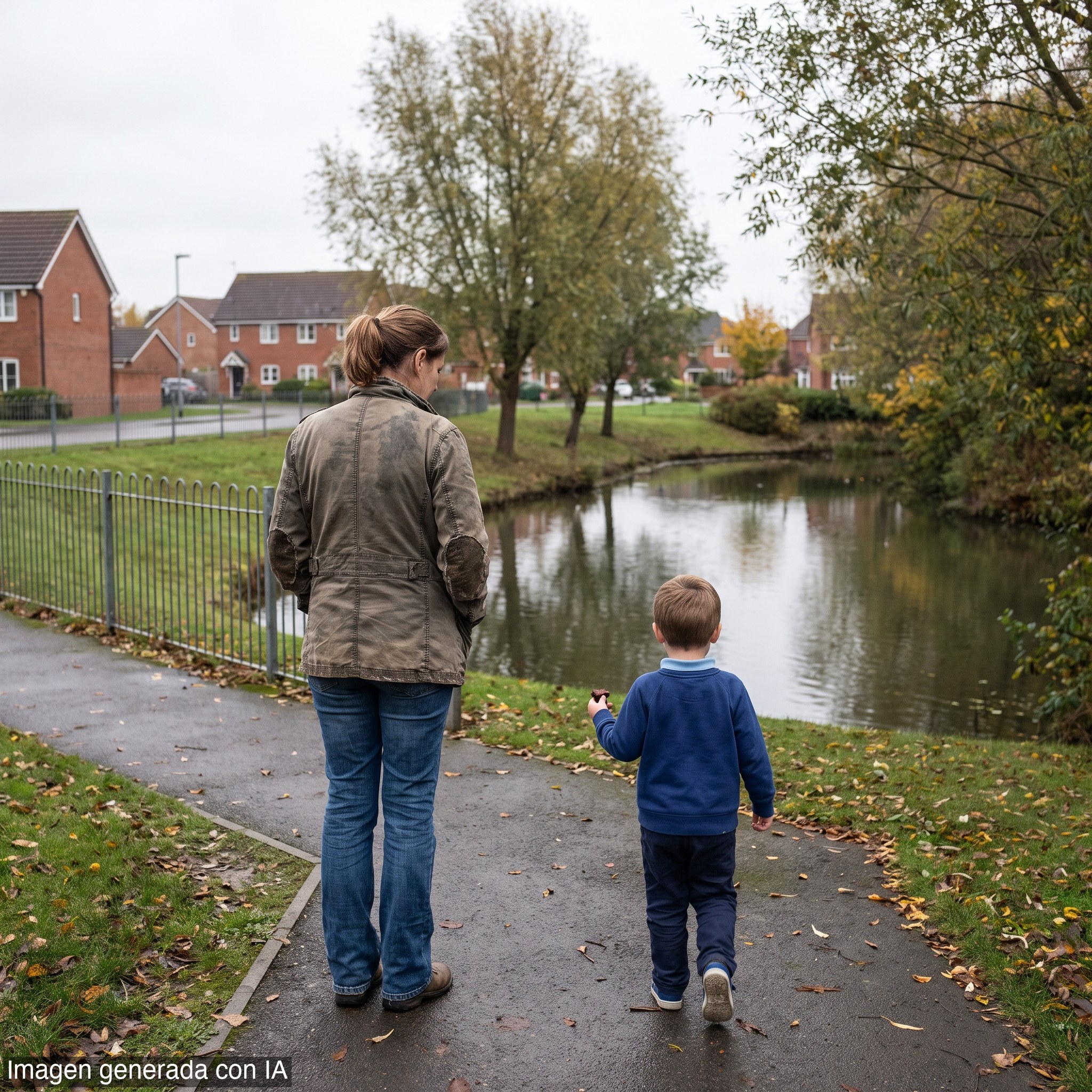
On a sunny day in June, Karyann Parkinson — then eight months pregnant with her fifth child — took her daily walk through Ford's Colony, a gated community in Williamsburg, Virginia that describes itself as 'a secure, multigenerational gated community situated on a landscape of golf courses, ponds, wetlands, and woodlands.' Her 5-year-old son Sam came along on his bike. At some point, Sam walked ahead to a neighborhood pond to collect goose feathers. Nothing happened to him.
What happened to his mother is another matter.
Parkinson was charged with contributing to the delinquency of a minor, a first-degree misdemeanor under Virginia law. In August, following a bench trial in the Williamsburg Juvenile & Domestic Relations District Court, a local judge convicted her and handed down a six-month suspended jail sentence. She was also placed on the child-abuse registry.
Sam was 5 years and eight months old at the time. The walking trail where this unfolded is set apart from the development's speed-controlled roads, with marked crosswalks. Parkinson had observed Sam crossing the road using adequate precautions — precautions, the record suggests, she had taught him herself.
Jonathan Adler, who describes himself as a then-neighbor and former teacher of Parkinson's and who attended the trial, writes at The Free Press that the conviction had less to do with the parenting decision itself than with Parkinson's refusal to defer when authorities questioned her about it. 'She was punished less for making a debatable parenting choice,' Adler writes, 'and more for refusing to come to heel when questioned about her decision.' According to Adler, it was not the goose feathers that sealed her fate — it was that 'she did not genuflect to the proper authorities.'
That framing, if accurate, is the more disturbing part of the record.
---
What this case illustrates is not a close call about child safety. It is a case about who holds authority over ordinary parenting decisions — the parent, or the state. A mother, in a secure gated community, on a trail separated from traffic, allowed a nearly-6-year-old boy to walk a short distance on his own. The child was unharmed. The community was undisturbed. The only consequence that required official remedy, apparently, was the mother's confidence in her own judgment.
The administrative and judicial machinery that produced this outcome — a misdemeanor conviction, a suspended jail sentence, a place on a child-abuse registry — did not make Sam safer. It made Parkinson's life measurably worse, and it sent a signal to every parent within earshot: defer, or face the record. That is not child protection. It is the state substituting its risk tolerance for a parent's, and using the criminal law to enforce the substitution. The principle at stake is straightforward. Parents, not judges, are the first institution of a child's life. When that institution is functioning — when the child is safe, the community is intact, and the only offense is insufficient deference to authority — the government has no legitimate business stepping in. The Parkinson case is a small story that points at something large.