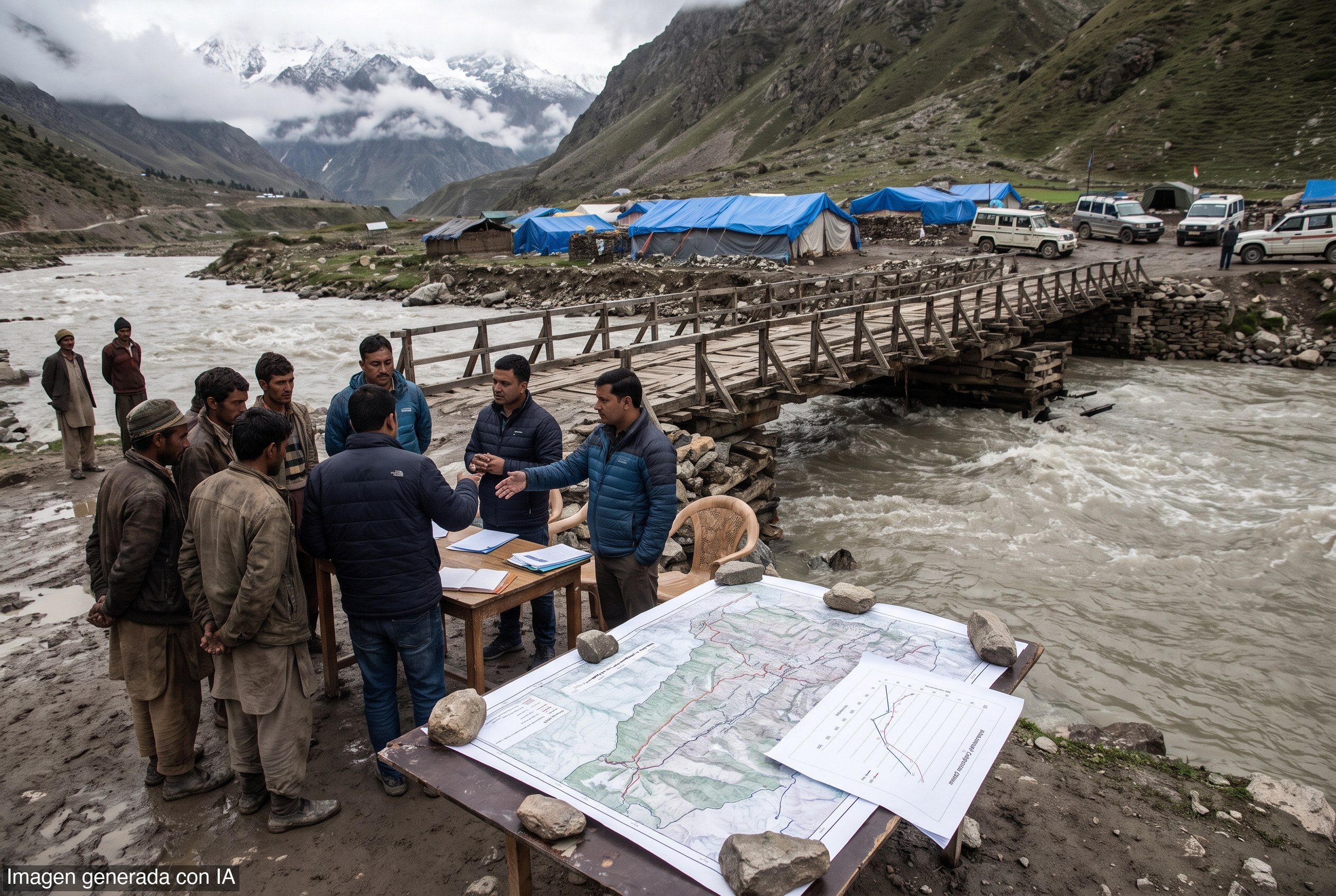
On August 26, a wall of rock and ice broke away from Langtang Lirung in the Himalayas, triggering a massive flood and mudflow that killed thousands of people along the border of Nepal and Tibet. Less than a month later, World Weather Attribution, an influential group housed at Imperial College London, published a report and a press release saying the catastrophe was linked to climate change.
The report traveled fast. Major media outlets ran with it, saying WWA’s scientists had concluded that human-caused global warming was behind the collapse. WWA also said early warning systems were useless against an event of that scale and called for a rapid exit from fossil fuels to reduce the risks of future events.
With that report in hand, Nepal’s government now plans to take a $20 million claim for compensation to the United Nations for loss and damage due to climate change.
Roger Pielke Jr. says the methods behind the WWA report were deeply flawed. He writes that WWA scientists have repeated this pattern more than 120 times since the group was founded in 2014: after a major weather event, they issue a press release and technical report linking the event to climate change, then assign a probability claim such as 'three times more likely,' '10 times more likely,' or 'impossible without climate change.' The media, he says, then publicize the claims without challenge.
Say it plainly: this is what happens when the press release outruns the evidence. A public-facing scientific claim can become a policy fact before anyone has tested whether the method holds up. Once that happens, the incentives shift away from rigor and toward narrative, and the bill is paid by taxpayers, consumers, and anyone asked to finance the next round of alarm.
The deeper issue is not one report in one disaster. It is the institutional habit of turning uncertain analysis into authority on demand. If the methods are weak, the consequence is not just bad science; it is bad governance. Governments make claims, media amplify them, and international bodies inherit the costs. What is true does not need an adjective.