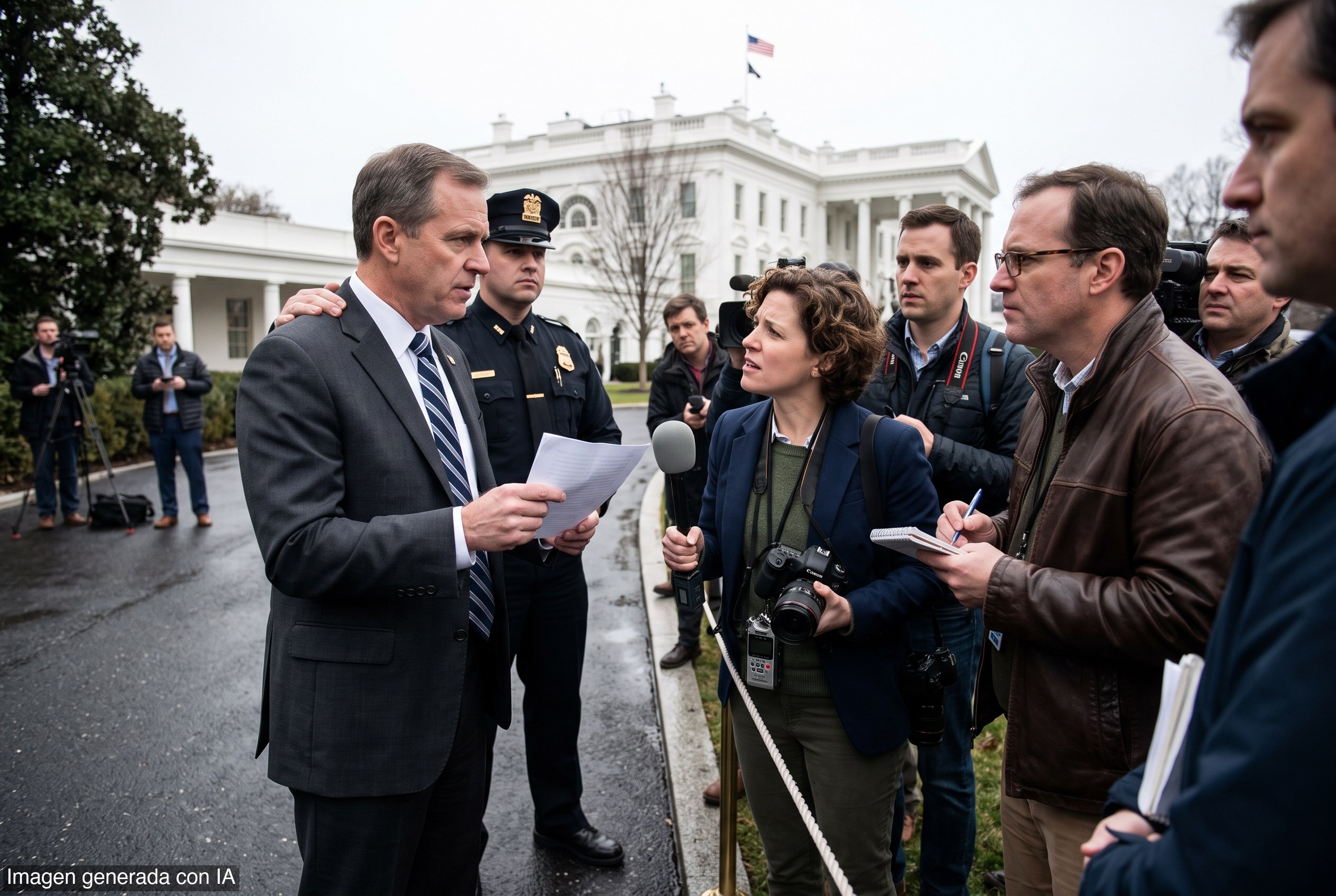
President Trump said on Friday afternoon that Politico, MS NOW, and CNN are now banned from the White House.
Talking to reporters in the Oval Office, he added: 'There's something wrong with a country that can allow people to write purposely negative stories.'
That is the factual record. It is also an unusually blunt collision between presidential power and the press. The record is public, and the line is easy to draw: a president can dislike coverage; he can criticize it; he cannot wish away the constitutional freedom that protects it.
The piece of evidence that matters most is not the rhetoric. It is the act itself. By barring reporters from the White House, Trump is once again showing a willingness to ride roughshod over the fourth estate, and the consequence is not abstract. Access to the president is not a luxury good for favored outlets. It is part of how a free country lets citizens see what their government is doing in real time.
Say it plainly: if the White House can punish outlets for unfavorable coverage, the incentive structure changes fast. Reporters learn to soften; institutions learn to fear exclusion; the public gets less independent scrutiny of the executive branch. That is not a healthy market for ideas. It is a warning sign.
The Founding-era logic here is simple. A republic does not require flattering stories, and it does not become less free because the press is adversarial. In fact, the opposite is closer to the truth: the harder the questions, the more valuable the scrutiny. What is true does not need an adjective.
Trump's complaint about 'purposely negative stories' may resonate with readers tired of media bias. But the remedy for bad reporting is not government gatekeeping. The remedy is more reporting, better reporting, and public judgment. Once officials start deciding which outlets may stand in the room, the principle at stake is no longer only journalism. It is the limit of state power.
The White House should not be a place where access depends on obedience. That is the trade-off this episode puts in front of the country. If the administration wants to argue with the press, it can do so openly. If it wants to ban the press for saying unpleasant things, it should expect a fight over the First Amendment — because that is what the record now shows.