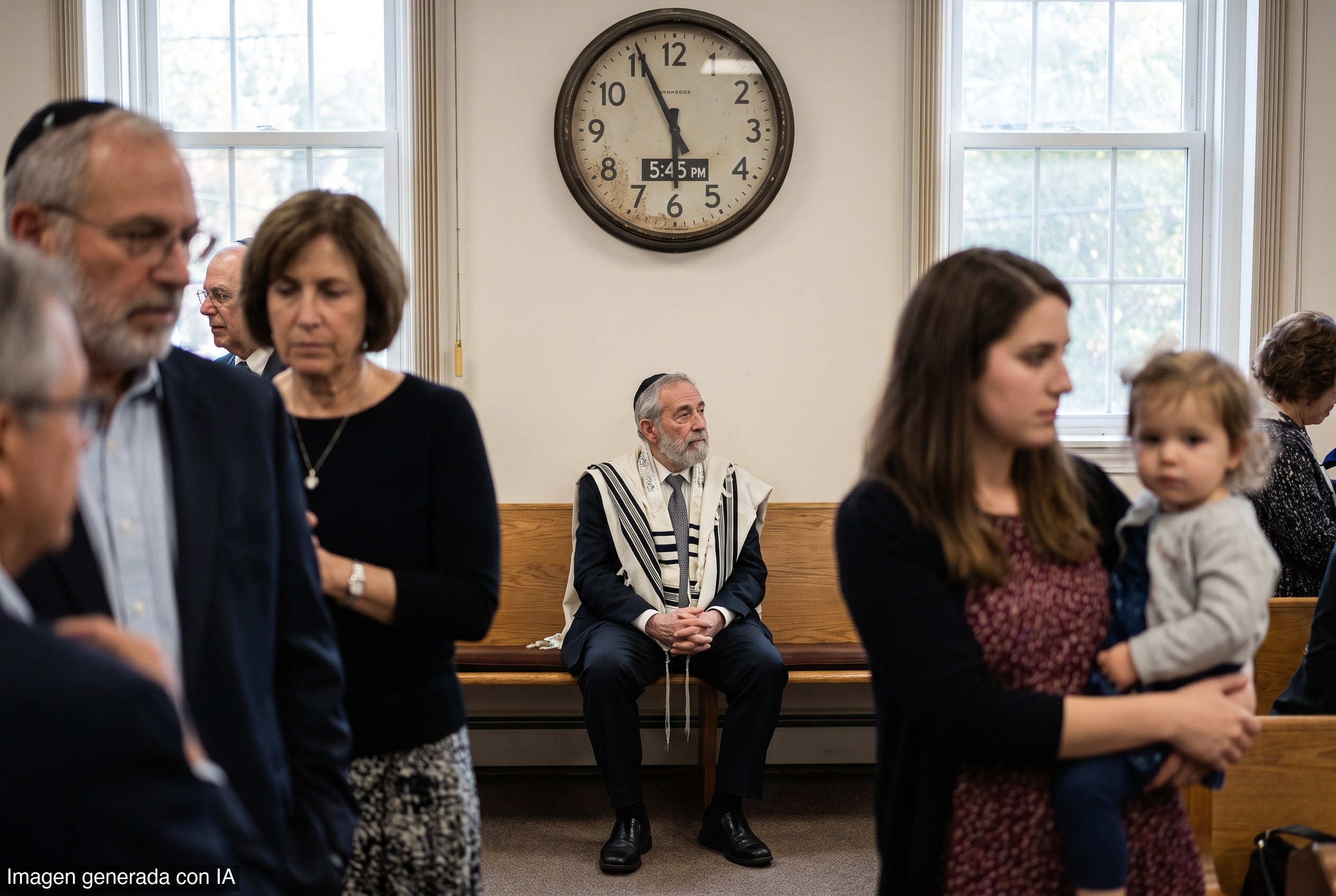
On Yom Kippur, David Wolpe writes, 'you are not promised forever, and therefore you should dance.' That is the argument at the center of his reflection: the awareness of death does not diminish life; it clarifies it.
Wolpe says that the moment one faces the possibility of death can be 'clarifying in a way no other experience can be.' In that instant, he writes, a person knows what and who is truly loved, and 'the dross of life falls away.'
He ties that insight to his own experience. Wolpe recalls two diagnoses, first a brain tumor and later blood cancer, and says each time he felt a crystalline sense of clarity. In those moments, he writes, small frustrations such as traffic and larger ones like finances seemed to matter less than the gift of being able to walk out of treatment and embrace those he loved.
But the clarity did not last. Wolpe says he believed he could hold that 'shocked lucidity' forever, yet the ordinary annoyances returned. 'The tire was still flat, the co-worker cranky, and the delivery went to the wrong house,' he writes. 'I survived to be irascible again.'
That is the human trade-off at the heart of the piece. We are given a brief, sharpened sense of what matters, and then daily life floods back in with its inconveniences, delays, and petty costs. The record of our own lives often shows that we need reminders to keep first principles in view.
Wolpe opens with Holocaust survivor Charlotte Delbo and says that reading her 1971 poem feels like being shaken 'by the shoulders,' a plea not to squander the gift others were robbed of. The point is not abstract. It is a call to gratitude, restraint, and attention.
Say it plainly: if life is finite, then time is precious, and precious things should not be wasted on what is trivial. That is not sentimentalism. It is discipline. It is also a reminder that the daily order of our lives is built from choices about what we reward with our attention.
The deeper consequence is moral, not bureaucratic. A person who remembers mortality may still have flat tires, bad traffic, and irritating coworkers. But he is less likely to confuse inconvenience with catastrophe, and less likely to treat comfort as the measure of a life well lived.
That is why Wolpe’s reflection lands beyond religion. It is a small argument for perspective, gratitude, and self-command. The world will not stop being messy. But it becomes easier to live well when we remember what survives the noise.