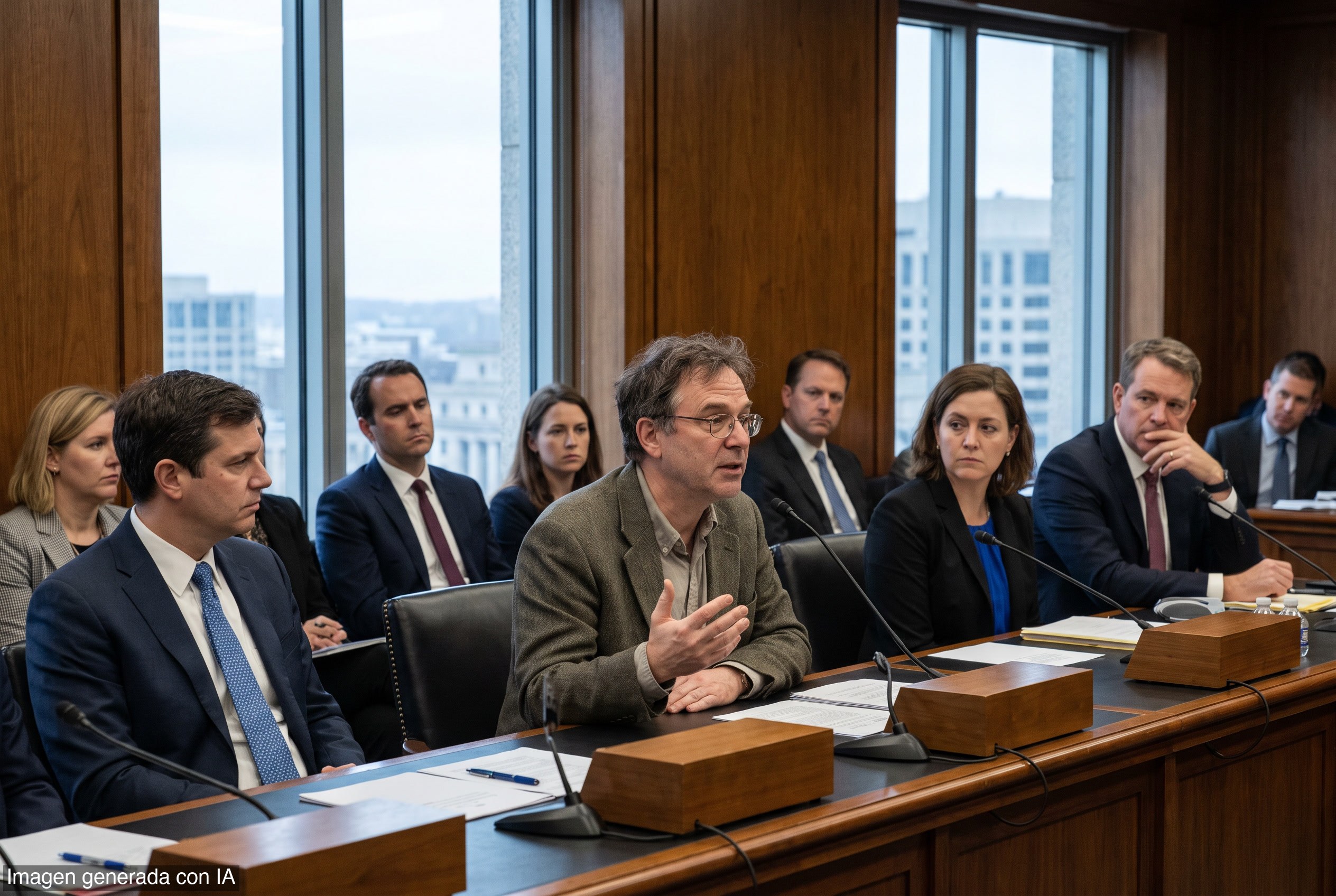
Jacob Coxon joined OpenAI, left for Anthropic, and then resigned from Anthropic four months later. His public post — 'I resigned from Anthropic today' — asked researchers to pause, to demand different conditions, and to consider what the next few years will actually feel like. The post went viral. Even Elon Musk noted the unusual reach: 'I don't think this has ever happened for a post from a new account with almost no prior activity.'
The argument is not frivolous. Evan Hubinger, the Anthropic lead responsible for 'alignment' — the discipline of ensuring AI does not decide to harm humans — backed Coxon's assessment of the stakes directly: 'Jacob is correct here — we really do earnestly believe AI could kill all humans. I personally think it is >10% within the next decade. I believe Anthropic is trying its best, but we do not yet have a plan to solve alignment for superintelligence and are not clearly on track to.'
That is a remarkable sentence from a sitting researcher at one of the leading AI laboratories in the world. It deserves to be read slowly and taken seriously.
The conclusion Coxon draws from it, however, is where the argument breaks down. His prescription is, in effect, that Americans should stop building. The implicit assumption is that if the United States pauses, other actors — China, Iran, others — will pause too, or that some collective pinky promise will hold. The record on arms-race dynamics does not support that assumption. Like every arms race in history, the mechanism for stopping it requires all parties to agree simultaneously. That agreement is not forming.
A separate Anthropic report on AI misuse, cited this week, documents what adversarial states are already doing with the tools that exist today. Iran, according to that report, has used AI systems for planning purposes — including, in one case, logistics around the Supreme Leader's funeral. The use cases will not stay that benign.
The deeper problem is cultural, not technical. A generation of talented Americans has been educated to view their own country's power as the primary threat to global stability — to see American capability as something to be surrendered rather than directed. Coxon's post is a clean expression of that worldview: the danger is us building the thing, not them building it without us.
What is true does not need an adjective. The alignment problem is real. The risk Hubinger describes is real. The researchers raising these concerns are not cranks. But the solution cannot be unilateral American restraint in a field where the alternative is ceding the frontier to states with no alignment research programs and no democratic accountability.
The question worth asking is not whether AI is dangerous. It plainly is. The question is who you want holding it when the decade Hubinger describes arrives. Follow the incentive, not the press release: every actor outside the American research ecosystem has less reason to solve alignment and more reason to deploy capability as fast as possible. Coxon's resignation is a genuine moral statement. It is also, as strategy, a gift to everyone who does not share his values.