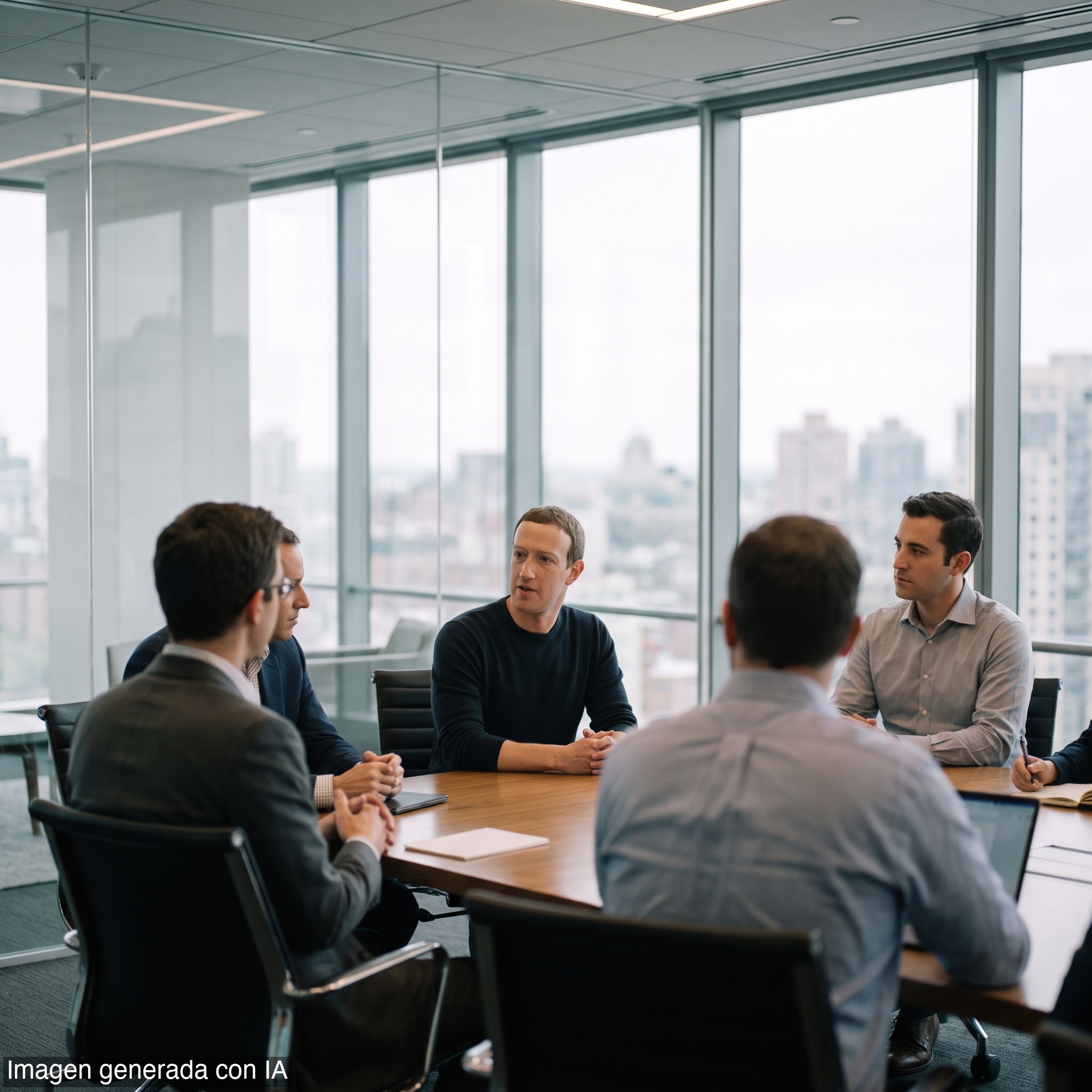
Mark Zuckerberg is now described in a new profile as a man who wants to 'build things and shape the world' without being 'an activist against our government.' That line, from Zuckerberg himself, is the cleanest window into the mentality of a platform chief who sits at the center of modern public life.
The scale matters. The profile says the social networks he oversees have 3.6 billion users, and that the company he controls has 'averaged, over nearly a quarter century, the addition of a zero to its valuation roughly once every U.S. presidential term.' That is not a normal business. It is an institution with reach, leverage, and consequences that stretch far beyond Silicon Valley.
The piece frames Zuckerberg as one of a handful of men whose products shape how we see everything. It also raises a harder question: whether these figures owe their influence to talent or luck, whether they have lost touch with reality, and whether their continued reign is inevitable. The record suggests that the debate around them is not just about technology, but about power itself.
Jeremy Stern, the writer behind the profile, spoke to three dozen people for the piece, including Zuckerberg’s parents, his wife, and Zuckerberg himself. The result is less a casual portrait than an inquiry into how a man with extraordinary private power understands his public role.
What stands out is the tension between control and accountability. Zuckerberg appears to want the authority that comes with shaping global communication, but not the political burden that follows from doing so. That is a familiar instinct in the modern administrative state of tech: influence without the discipline of open political responsibility.
Say it plainly. When a company reaches the scale described here, it affects markets, speech, and the daily habits of billions. The incentive structure matters. A founder can present himself as a builder, a neutral technologist, even a reluctant public actor. But the consequence of that posture is that power accumulates while responsibility stays blurred.
That is the trade-off the profile puts in view. A reader does not need speculation to see it. The numbers are already enough. 3.6 billion users. Near-quarter-century valuation leaps. A founder still central decades after launch. Those facts describe an enormous private institution operating in a space that used to belong to governments, publishers, and markets.
The free society question is not whether Zuckerberg is interesting. He plainly is. It is whether institutions with this scale can remain accountable when their leaders insist they are not activists, not ideologues, and not public officials — even as they help shape the public square itself.