The tip arrived the way the best ones do: sideways, at a party, from someone who was already nervous about losing it.
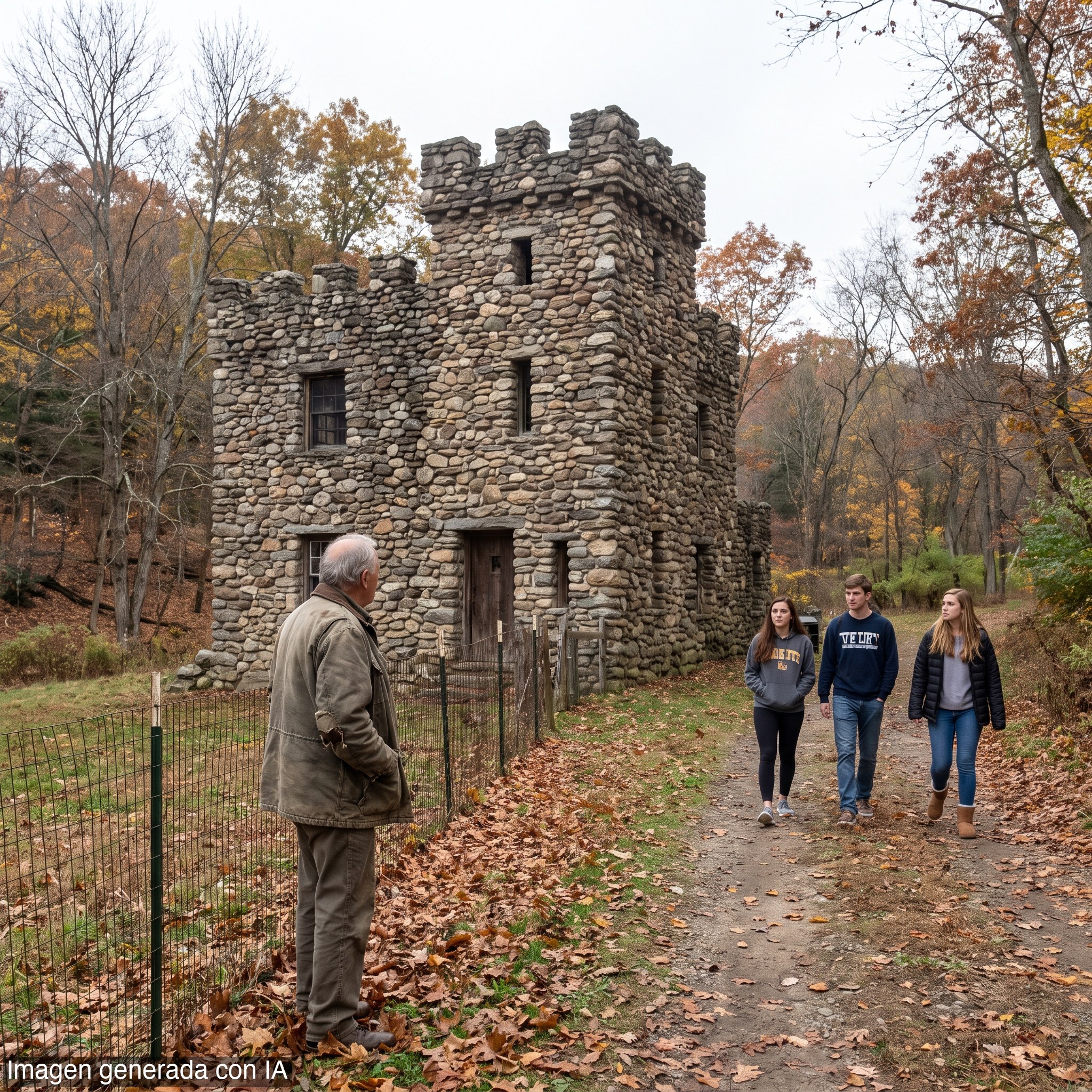
It was a barn gathering near Rhinebeck, New York, roughly three years ago. Among the guests was author Jon Ronson, who pulled up at dinnertime with what turned out to be his son and a group of friends. When asked what he was working on, Ronson was visibly excited and visibly guarded in equal measure. The outline he offered was spare: his son, a party, and a castle in the far northeastern corner of Connecticut, built by a man named Chris Mark — described as very wealthy and, in the words of the source, very horny — who had been drawing in young people, specifically Zoomers, under circumstances that remained, at that point, deliberately vague.
Ronson did not want to say more. He had, by his own account, a spectacular story in hand. He was thrilled. He was also, plainly, afraid someone else would get there first. On his way out of the party, he tapped the writer on the shoulder — a gesture that read less like a farewell and more like a reminder that the conversation had a confidentiality attached to it.
What is on the record: Chris Mark built a castle. It sits in rural Connecticut. He has, according to the source material, virtually limitless funds. He is, by the same account, forever generating plans, plots, and reality television pitches — all of them organized around the castle as a central prop or premise.
What is not yet fully on the record: what, precisely, he was doing with the young people who showed up there.
That gap — between the wealth, the construction, the recruitment, and the outcome — is where the story lives. Ronson saw it. The writer at the barn party saw it. The instinct to sit on a tip until you can tell it properly is a sound one. The instinct to tap someone on the shoulder on the way out the door suggests the story had weight.
The Signal will note what the sourcing here makes plain: a man with unlimited resources, a self-built monument to his own vision, and a habit of surrounding himself with people two generations younger is a figure worth scrutinizing on first principles alone. Wealth insulates. Institutions, when they function, are supposed to provide the friction that wealth removes. When those institutions are absent — and in rural no-man's-land, they often are — the question of who is watching, and whether anyone is asking the right questions, is not a small one.
The record, so far, is incomplete. That is not a reason to ignore it. It is a reason to keep reading.